
UNITED STATES
SECURITIES AND EXCHANGE COMMISSION
WASHINGTON, D.C. 20549
Form
☒ ANNUAL REPORT PURSUANT TO SECTION 15(d)
OF THE SECURITIES EXCHANGE ACT OF 1934
For the fiscal year ended
OR
☐ TRANSITION REPORT PURSUANT TO SECTION 15(d)
OF THE SECURITIES EXCHANGE ACT OF 1934
For the transition period from _______________ to _______________
Commission file number 1-8974
Honeywell 401(k) Plan
(Full Title of Plan)
855 S. Mint Street
Charlotte, NC 28202
(Name of Issuer of Securities Held Pursuant to
the Plan and
the Address of its Principal Executive Office)
Honeywell 401(k) Plan
Index
| * | Other schedules required by Section 2520.103-10 of the Department of Labor Rules and Regulations for Reporting and Disclosure under the Employee Retirement Income Security Act of 1974 have been omitted as the conditions under which they are required are not present. |
REPORT OF INDEPENDENT REGISTERED PUBLIC ACCOUNTING FIRM
To the Plan Participants and Plan Administrator of Honeywell 401(k) Plan:
Opinion on the Financial Statements
We have audited the accompanying statement of net assets available for benefits of Honeywell 401(k) Plan (the “Plan”) as of December 31, 2025, the related statement of changes in net assets available for benefits for the year then ended, and the related notes (collectively referred to as the “financial statements”). In our opinion, the financial statements present fairly, in all material respects, the net assets available for benefits of the Plan as of December 31, 2025, and the changes in net assets available for benefits for the year then ended, in conformity with accounting principles generally accepted in the United States of America.
Basis for Opinion
These financial statements are the responsibility of the Plan’s management. Our responsibility is to express an opinion on the Plan’s financial statements based on our audit. We are a public accounting firm registered with the Public Company Accounting Oversight Board (United States) (PCAOB) and are required to be independent with respect to the Plan in accordance with the U.S. federal securities laws and the applicable rules and regulations of the Securities and Exchange Commission and the PCAOB.
We conducted our audit in accordance with the standards of the PCAOB. Those standards require that we plan and perform the audit to obtain reasonable assurance about whether the financial statements are free of material misstatement, whether due to error or fraud. Our audit included performing procedures to assess the risks of material misstatement of the financial statements, whether due to error or fraud, and performing procedures that respond to those risks. Such procedures included examining, on a test basis, evidence regarding the amounts and disclosures in the financial statements. Our audit also included evaluating the accounting principles used and significant estimates made by management, as well as evaluating the overall presentation of the financial statements. We believe that our audit provide a reasonable basis for our opinion.
| 4 |
Report on Supplemental Schedules
The supplemental schedule of assets (held at end of year) as of December 31, 2025 and Schedule of Delinquent Participant Contributions for the year ended December 31, 2025 have been subjected to audit procedures performed in conjunction with the audit of the Plan’s financial statements. The supplemental schedules are the responsibility of the Plan’s management. Our audit procedures included determining whether the supplemental schedules reconcile to the financial statements or the underlying accounting and other records, as applicable, and performing procedures to test the completeness and accuracy of the information presented in the supplemental schedules. In forming our opinion on the supplemental schedules, we evaluated whether the supplemental schedules, including their form and content, are presented in compliance with the Department of Labor’s Rules and Regulations for Reporting and Disclosure under the Employee Retirement Income Security Act of 1974. In our opinion, such schedules are fairly stated, in all material respects, in relation to the financial statements as a whole.
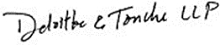
Charlotte, North Carolina
June 26, 2026
We have served as the auditor of the Plan since 2026.
| 4 |
Honeywell 401(k) Plan
Statements of Net Assets Available for Benefits
at December 31, 2025 and 2024
| 2025 | 2024 | |||||||
| (dollars in millions) | ||||||||
| Plan interest in Honeywell Savings and Ownership Plan Master Trust, at fair value | $ | $ | ||||||
| Notes receivable from participants | ||||||||
| Contribution receivable from the Company, net of forfeitures | ||||||||
| Total receivables | ||||||||
| Net assets available for benefits | $ | $ | ||||||
The accompanying notes are an integral part of these financial statements.
| 4 |
Honeywell 401(k) Plan
Statement of Changes in Net Assets Available for Benefits
for the Year Ended December 31, 2025
| 2025 | ||||
| (dollars in millions) | ||||
| Additions to net assets attributable to: | ||||
| Investment gain from Plan interest in Honeywell Savings and Ownership Plan Master Trust | $ | |||
| Contributions: | ||||
| Participating employees | ||||
| The Company, net of forfeitures | ||||
| Roll-over contributions | ||||
| Total contributions | ||||
| Total additions | ||||
| Deductions from net assets attributable to: | ||||
| Benefits paid to participants | ( | ) | ||
| Plan expenses | ( | ) | ||
| Total deductions | ( | ) | ||
| Net increase in net assets during year | ||||
| Net assets available for benefits: | ||||
| Beginning of year | ||||
| End of year | $ | |||
The accompanying notes are an integral part of these financial statements.
| 5 |
Honeywell 401(k) Plan
Notes to Financial Statements
| 1. | Description of the Plan |
General
The Honeywell 401(k) Plan (the “Plan”) is a defined contribution plan for certain employees of Honeywell International Inc. (the “Company”). The Plan is subject to the provisions of the Employee Retirement Income Security Act of 1974, as amended, (“ERISA”) and the Internal Revenue Code (“Code”). The following represents a summary of key provisions of the Plan but does not purport to be complete and is qualified in its entirety by the terms of the Plan. Participants should refer to the
The Company divested its Personal Protective Equipment (“PPE”) business, effective May 22, 2025. Company employees who transferred with PPE ceased participation upon termination of their employment with the Company. Participant balances did not transfer from the Plan. Each transferred employee (a) vested in their Company match account under the Plan as of May 22, 2025, regardless of their years of vesting service, and (b) was eligible to receive a Company matching contribution for the 2025 Plan year based on base pay paid and matched contributions contributed while employed by the Company from January 1, 2025 to May 22, 2025. Matching contributions were contributed to the Plan on July 3, 2025.
On July 1, 2025, the Company acquired Li-ion Tamer. Acquired employees were employed by the Company as of July 1, 2025, and eligible for participation under the terms of the Plan, which was amended to provide credit for prior years of service at Li-ion Tamer for purposes of vesting service.
The Company spun-off its Advanced Materials business, effective October 30, 2025, to form a separate entity, Solstice Advanced Materials, Inc. (“Solstice”). Company employees who transferred with Solstice ceased participation upon termination of their employment with the Company. Participant balances did not transfer from the Plan. Each transferred employee (a) vested in their Company match account under the Plan as of October 30, 2025, regardless of their years of vesting service, and (b) was eligible to receive a Company matching contribution for the 2025 Plan year based on base pay paid and matched contributions contributed while employed by the Company from January 1, 2025 to October 30, 2025. Matching contributions were contributed to the Plan on Solstice 401(k) plan on January 30, 2026.
Administration
The Company’s Vice President – Global Total Rewards is the Plan Administrator and has full discretionary authority and power to control and manage the administrative aspects of the Plan, including, but not limited to, the power to adopt rules of procedure and regulations necessary for the proper and efficient administration of the Plan and the power to enforce the terms of the Plan it adopts. The Savings Plan Investment Committee has the full power and discretionary authority to manage the investments of the Plan, including but not limited to the power to appoint and remove trustees and monitor trustee performance. The trustee and custodian of the Plan is The Northern Trust Company (the “Trustee”).
Administration services for the Plan are provided by Fidelity Investments Institutional Operations Company.
Contributions and Vesting
Participants are permitted to contribute from
| 6 |
Honeywell 401(k) Plan
Notes to Financial Statements - Continued
respective plan year and are contributing at least
Depending on the rate designated for the participant’s Participating Unit, as defined below, the Company makes matching contributions with respect to a participant’s contributions. A Participating Unit is a group of employees which has been designated as participating in the Plan. The Company may contribute on behalf of each participant between
There are two forms of Company matching contributions: (i) variable Company matching contributions and (ii) non-variable Company matching contributions. Participating Units whose employees are covered by collective bargaining agreements or government contracts, the terms of which may change the Company match from time to time, receive variable Company matching contributions, unless the collective bargaining agreement or government contract provides that the employees are eligible for non-variable Company matching contributions.
Participating Units whose employees are not covered by collective bargaining agreements or government contracts (unless the collective bargaining agreement or government contract provides otherwise) are generally eligible for non-variable Company matching contributions. Participating Units covered by a non-variable match receive basic matching contributions whereby the Company matches
Company match contributions
for non-variable match participants and certain variable match participants are made annually in a lump sum by the end of
the January following the calendar year-end. These participants must be actively employed on December 15th, or if not,
disabled or deceased to receive such match. Accordingly, the Statements of Net Assets Available for Benefits at
December 31, 2025 and 2024 includes an amount Statement of $
Company match contributions for certain other variable match participants are made on a per-payroll period basis, beginning the first month the participant is eligible to receive matching contributions.
For non-variable match participants, there is no minimum service requirement to receive the annual Company match. For variable match participants, minimum service requirements are set forth in the participant’s collective bargaining agreement.
Participants have a full and immediate vested interest in the portion of their accounts contributed by them and the earnings on such contributions. A participant will become
| 7 |
Honeywell 401(k) Plan
Notes to Financial Statements - Continued
Participant Accounts
Each participant’s account is credited with the participant’s contribution and allocations of (1) the Company’s matching contribution, if applicable, and (2) investment earnings, and charged with an allocation of investment losses and administrative expenses. The allocation is based on participants’ account balances as defined in the Plan document. The benefit to which a participant is entitled is the benefit that can be provided from the participant’s vested account.
Notes Receivable from Participants
No new loans are permitted from the Plan. Interest rates for loans outstanding at December 31, 2025 were between
Termination
Although it has not expressed any intent to do so, the Company has the right under the Plan document to discontinue its contributions at any time and to terminate the Plan subject to the provisions of ERISA. In the event of a partial or full Plan termination, all Plan funds must be used in accordance with the terms of the Plan.
Distribution of Benefits
Upon termination of service with the Company, if a participant’s vested account balance is $
If the vested amount in a participant’s account is greater than $
If the participant’s vested account balance exceeds $
Forfeitures
Forfeitures of the Company’s contributions and earnings thereon due to terminations and withdrawals reduce contributions otherwise due from the Company, as permitted by the Plan. Company contributions made to the Plan were reduced by approximately $
| 2. | Significant Accounting Policies |
Basis of Accounting
The financial statements of the Plan are prepared in accordance with accounting principles generally accepted in the United States of America (“U.S. GAAP”) using the accrual basis of accounting.
Use of Estimates
The preparation of financial statements in conformity with U.S. GAAP requires management to make estimates and assumptions that affect the reported amounts of assets and liabilities and changes therein, and disclosure of contingent assets and liabilities. Actual results could differ from those estimates.
| 8 |
Honeywell 401(k) Plan
Notes to Financial Statements - Continued
Investment Valuation
The Plan’s assets are held in the Honeywell Savings and Ownership Plan Master Trust (“Master Trust”) along with the assets of the Honeywell Puerto Rico Savings Plan, the Honeywell Secured Benefit Plan and the Intermec FSSP Spinoff Plan. The Plan’s investment in the Master Trust represents the Plan’s interest in the net assets of the Master Trust for investment and administrative purposes. The Plan’s interest in the Master Trust is stated at fair value.
Notes Receivable from Participants
Notes receivable from participants are valued at unpaid principal balance cost plus accrued unpaid interest.
Contributions
Employee contributions are recorded when withheld and employer matching contributions when earned.
Payment of Benefits
Withdrawals and distributions to participants are recorded when paid.
Expenses
Most expenses relating to the administration of the Master Trust and managing the funds established thereunder are borne by the participating plans. Administrative expenses of the Plan are paid by the Plan or the plan sponsor, as provided in the Plan document. Participants pay administrative costs for loans, distributions and qualified domestic relation orders.
| 3. | Separately Managed Portfolios |
The individual assets of the Master Trust’s separately managed portfolios and multi-manager funds are held in the name of the Master Trust (i.e., the Master Trust owns the underlying securities) and are considered separately as individual investments for accounting and financial statement reporting purposes.
The Master Trust owns
Global REIT Fund
Growth Equity Fund
International Stock Fund
Investment Grade Bond Fund
Short-Term Fixed Income Fund
Small
to Mid-Cap Stock Fund
Value/Yield Equity Fund
Honeywell Common Stock Fund
| 4. | Interest in Honeywell Savings and Ownership Plan Master Trust |
The Plan’s investments are held in the Master Trust, which is commingled with the assets of the Honeywell Puerto Rico Savings Plan, the Honeywell Secured Benefit Plan and the Intermec FSSP Spinoff Plan. Each participating plan’s interest in the Master Trust is divided based on the participants’ investment elections. The interest and dividends and the net depreciation or appreciation in the fair value of investments are allocated to the individual accounts on a daily basis based upon the individual accounts’ equitable share of the various investment funds that comprise the Master Trust. The total interest of the Plan is determined as the sum of the individual account balances of the Plan. The allocation of income and expenses is based upon each plan’s specific interests in the underlying plan investments, which are based upon participant-direction and Company direction of the investments.
The Master Trust and the Plan’s interest in the Master Trust is comprised of the following types of investments, at fair value, as of December 31, 2025:
| 2025 | |||||||||
| Master Trust Balances | Plan’s Interest in Master Trust Balances | ||||||||
| (dollars in millions) | |||||||||
| Collective Trust Funds | $ | $ | |||||||
| Exchange Traded Funds | |||||||||
| Honeywell Common Stock | |||||||||
| Common Stocks (Separately Managed Portfolios) | |||||||||
| Asset Backed Securities | |||||||||
| Bank Deposits | |||||||||
| Commercial Mortgage Backed Securities | |||||||||
| Corporate Bonds | |||||||||
| U.S. Government and Federal Agencies | |||||||||
| Municipal Bonds | |||||||||
| Non-US Government | |||||||||
| Commercial Paper | |||||||||
| Cash and cash equivalents | |||||||||
| Total Investments, at fair value | |||||||||
| Net assets of the Master Trust | $ | $ | |||||||
The Master Trust and the Plan’s interest in the Master Trust is comprised of the following types of investments, at fair value, as of December 31, 2024:
| 9 |
Honeywell 401(k) Plan
Notes to Financial Statements - Continued
| 2024 | |||||||||
| Master Trust Balances | Plan’s Interest in Master Trust Balances | ||||||||
| (dollars in millions) | |||||||||
| Collective Trust Funds | $ | $ | |||||||
| Exchange Traded Funds | |||||||||
| Honeywell Common Stock | |||||||||
| Common Stocks (Separately Managed Portfolios) | |||||||||
| Asset Backed Securities | |||||||||
| Bank Deposits | |||||||||
| Commercial Mortgage Backed Securities | |||||||||
| Corporate Bonds | |||||||||
| U.S. Government and Federal Agencies | |||||||||
| Non-US Government | |||||||||
| Commercial Paper | |||||||||
| Total Investments, at fair value | |||||||||
| Net assets of the Master Trust | $ | $ | |||||||
The Master Trust’s net appreciation and investment income for the year ended December 31, 2025 is as follows:
| 2025 | |||||
| (dollars in millions) | |||||
| Net appreciation in fair value of investments | $ | ||||
| Dividend and interest income | |||||
| Total investment income and net appreciation | $ | ||||
Investment Valuation and Income Recognition – Master Trust
Master Trust investments are stated at fair value. Interest income is recorded on the accrual basis, and dividend income is recorded on the ex-dividend date. Purchases and sales of securities are recorded on a trade-date basis. Net appreciation/(depreciation) consists of both realized gains/(losses) on investments bought, sold and matured, as well as the change in unrealized gains/(losses) on investments held during the year.
From time to time, investment managers may use derivative financial instruments including foreign exchange forward and futures contracts. Derivative instruments are used primarily to mitigate exposure to foreign exchange rate and interest rate fluctuations as well as manage the investment composition in the portfolio. The Master Trust held no derivative instruments as of December 31, 2025 and 2024.
Determination of Fair Value
The accounting guidance defines fair value as the price that would be received to sell an asset or paid to transfer a liability in an orderly transaction between market participants at the measurement date and establishes a framework for measuring fair value.
The Master Trust valuation methodologies for assets and liabilities measured at fair value are described below. The methods described as follows may produce a fair value calculation that may not be indicative of net realizable value or reflective of future fair values. Furthermore, while the Master Trust believes its valuation methods are appropriate and consistent with other market participants, the use of different methodologies or assumptions to determine the fair value of certain financial instruments could result in a different estimate of fair value at the reporting date.
| 10 |
Honeywell 401(k) Plan
Notes to Financial Statements - Continued
Valuation Hierarchy
ASC 820, Fair Value Measurements and Disclosures, provides the accounting guidance establishes a framework three-level valuation hierarchy for measuring disclosure of fair value. The valuation hierarchy is based upon the transparency of inputs to the valuation of an asset or liability as of the measurement date. The three levels are defined as follows:
| ● | Level 1 — inputs to the valuation methodology are quoted prices (unadjusted) for identical assets or liabilities in active markets. | |
| ● | Level 2 — inputs to the valuation methodology include quoted prices for similar assets or liabilities in active markets, and inputs that are observable for the asset or liability, either directly or indirectly, for substantially the full term of the financial instrument. | |
| ● | Level 3 — inputs to the valuation methodology are unobservable and significant to the fair value measurement. |
A financial instrument’s categorization within the valuation hierarchy is based upon the lowest level of input that is significant to the fair value measurement. Valuation techniques used need to maximize the use of observable inputs and minimize the use of unobservable inputs. The hierarchy gives the highest priority to unadjusted quoted prices in active markets for identical assets or liabilities (Level 1 measurements) and the lowest priority to unobservable inputs (Level 3 measurements).
The following is a description of the valuation methodologies used for financial instruments measured at fair value. There have been no changes in the methodologies used at December 31, 2025 and 2024.
Collective Trust Funds
Collective Trust funds are investment vehicles utilized as or within the target date funds, equity index funds, investment grade bond fund, and global REIT fund. These funds permit daily subscriptions and redemption of units. These investments are valued using net asset values (“NAV”) provided by the administrator of the underlying fund. The NAV is based on the value of the underlying assets owned by the fund, less its liabilities, divided by the number of units outstanding.
Collective Trust funds measured at fair value using NAV per share (or its equivalent) as a practical expedient have not been classified in the fair value hierarchy. The fair value amounts presented in the hierarchy tables for Collective Trust funds are intended to permit reconciliation of the Master Trust’s total investments, at fair value.
Cash & cash equivalents
Cash & cash equivalents represent interest-bearing cash amounts valued at cash plus interest earned.
Honeywell International Inc. Common Stock, other Common Stocks and Exchange Traded Funds
Honeywell International Inc. common stock is valued at the closing price reported on the National Association of Securities Dealers Automated Quotations (“NASDAQ”). Other common stocks and exchange traded funds are valued at the closing price reported on the principal market on which the respective securities are traded. Honeywell International Inc. common stock, other common stocks and exchange traded funds are all classified within level 1 of the valuation hierarchy.
Fixed Income Investments
Fixed income securities (other than commercial mortgage backed securities) are valued at the regular close of trading on each valuation date at the evaluated bid prices supplied by pricing vendors or brokers, if any, whose prices reflect broker/dealer supplied valuations and electronic data processing techniques. Commercial mortgage backed securities are valued using pool-specific pricing. The pool-specific pricing is provided by the pricing vendors and typically they use Interactive Data for these investments. Fixed income securities, including corporate bonds, U.S. government and federal agencies, municipal bonds, Non-U.S. government, commercial paper, bank deposits, asset-backed securities and commercial mortgage backed securities are classified within Level 2 of the valuation hierarchy.
| 11 |
Honeywell 401(k) Plan
Notes to Financial Statements - Continued
The following tables present the Master Trust’s assets measured at fair value as of December 31, 2025 and 2024, by the fair value hierarchy.
| 2025 | |||||||||||||||||
| Level 1 | Level 2 | Level 3 | Total | ||||||||||||||
| (dollars in millions) | |||||||||||||||||
| Common Stocks | $ | $ | $ | $ | |||||||||||||
| Cash and cash equivalents | |||||||||||||||||
| Exchange Traded Funds | |||||||||||||||||
| Fixed Income Investments: | |||||||||||||||||
| Asset Backed Securities | |||||||||||||||||
| Bank Deposits | |||||||||||||||||
| Commercial Mortgage Backed Securities | |||||||||||||||||
| Corporate Bonds | |||||||||||||||||
| U.S. Government and Federal Agencies | |||||||||||||||||
| Municipal Bonds | |||||||||||||||||
| Non-US Government | |||||||||||||||||
| Commercial Paper | |||||||||||||||||
| $ | $ | $ | |||||||||||||||
| Collective Trust Funds | |||||||||||||||||
| Total Investments | $ | ||||||||||||||||
| 2024 | |||||||||||||||||
| Level 1 | Level 2 | Level 3 | Total | ||||||||||||||
| (dollars in millions) | |||||||||||||||||
| Common Stocks | $ | $ | $ | $ | |||||||||||||
| Exchange Traded Funds | |||||||||||||||||
| Fixed Income Investments: | |||||||||||||||||
| Asset Backed Securities | |||||||||||||||||
| Bank Deposits | |||||||||||||||||
| Commercial Mortgage Backed Securities | |||||||||||||||||
| Corporate Bonds | |||||||||||||||||
| U.S. Government and Federal Agencies | |||||||||||||||||
| Non-US Government | |||||||||||||||||
| Commercial Paper | |||||||||||||||||
| $ | $ | $ | |||||||||||||||
| Collective Trust Funds | |||||||||||||||||
| Total Investments | $ | ||||||||||||||||
| 5. | Nonparticipant-Directed Investments |
The Plan provides for both participant-directed and nonparticipant-directed investment programs. Company matching contributions are initially invested in the Company’s common stock, which is a nonparticipant-directed investment option. Participants may subsequently transfer these amounts to other investment options at their discretion once vested.
Information about the net assets and the significant components of the changes in net assets relating to the nonparticipant-directed investments as of and for the year ended December 31, 2025, is as follows:
| 2025 | |||||
| (dollars in millions) | |||||
| Net assets: | |||||
| Honeywell Common Stock Fund | $ | ||||
| Changes in net assets during 2025: | |||||
| Net (depreciation) | ( | ) | |||
| Dividends | |||||
| Company contributions | |||||
| Participating employee contributions | |||||
| Roll-over contributions | |||||
| Benefits paid to participants | ( | ) | |||
| Plan expenses | ( | ) | |||
| Net transfers to participant-directed investments | ( | ) | |||
| Net change | $ | ( | ) | ||
| 6. | Nonexempt Party-In-Interest Transactions |
The Company remitted certain participant contributions to the Trustee later than required by Department of Labor Regulation 2510.3-102. The Company has credited participant accounts with the amount of investment income that would have been earned had the participant contribution been remitted on a timely basis.
| 7. | Related Party Transactions and Exempt Party-In-Interest Transactions |
The
Master Trust is invested in the Company’s common stock which qualifies as an exempt party-in-interest transaction.
During the year ended December 31, 2025, the Master Trust’s investment in the Company’s common stock included
purchases of approximately $
| 12 |
Honeywell 401(k) Plan
Notes to Financial Statements - Continued
The Company is both the plan sponsor and a party to the Master Trust, therefore the Master Trust investment and the Plan’s interest of $
| 8. | Risks and Uncertainties |
The Plan provides for various investment options. Investment securities are exposed to certain risks, such as interest rate, market, liquidity and credit risks. Due to the level of risk associated with certain investment securities, it is at least reasonably possible that changes in the value of investment securities will occur in the near term and that such changes could materially affect participants’ account balances and the amounts reported in the statements of net assets available for benefits and the statement of changes in net assets available for benefits. The Plan’s exposure to a concentration of credit risk is limited by the opportunity to diversify investments across multiple participant-directed fund elections including active and passively managed funds covering multiple asset classes. Additionally, the investments within each participant-directed fund election are further diversified into varied financial instruments, with the exception of the Honeywell Common Stock Fund, which primarily invests in a single security.
| 9. | Federal Income Taxes |
On
U.S. GAAP requires plan management to evaluate tax positions taken by the Plan and recognize a tax liability if the Plan has taken an uncertain position that more likely than not would not be sustained upon examination by the Internal Revenue Service. As of December 31, 2025 and 2024, the Company has analyzed the tax positions by the Plan and has concluded that there are no uncertain positions taken or expected to be taken that would require recognition of a liability (or asset) or disclosure in the financial statements. The Plan is subject to routine audits by taxing jurisdictions, however, there are currently no audits for any tax periods in progress.
| 10. | Subsequent Events (Unaudited) |
The Plan has evaluated
subsequent events through the date the financial statements were issued and has identified the following events requiring
disclosure. Effective July 31, 2026, by amendment to the Plan executed June 24, 2026, the Sundyne, LLC Employee Savings Plan
will be merged into the Honeywell 401(k) Plan, with assets of the Sundyne, LLC Employee Savings Plan merging into the Master
Trust. Though asset amounts may change between this representation and the time of merger, the amount to be merged is
approximately $
| 13 |
Total That Constitute Nonexempt Prohibited Transactions
Participant Contributions Transferred Late to the Plan Contributions Not Corrected
Contributions Corrected Outside VFCP
Contributions Pending Correction in VFCP
Total Fully Corrected Under VFCP and PTE 2002-51
Check here if late participant loan contributions are included X
| Participant Contributions Transferred late to the plan | Contributions not corrected | Contributions corrected outside VFCP | Contributions Pending correction in VFCP | Total fully corrected | |||||||||||||
| 2025 participant contributions transferred late to the Plan | $ | - | $ | 196,226 | $ | - | $ | - | |||||||||
| 2024 participant contributions transferred late to the Plan | - | 6,917 | - | - |
See accompanying Independent Auditor’s Report
| 14 |
Honeywell 401(k) Plan
Schedule H, Line 4(i) – Schedule of Assets (Held at End of Year)
As of December 31, 2025
Employer Identification Number: 22-2640650
Plan Number: 302
(Dollars in Millions)
| Identity of Issue | Description | Current Value | ||||
| *Notes receivable from participants | (Interest rates range from 3.25% - 10.50%, maturing through May 30, 2036) |
$3 | ||||
* Party-in-interest.
| 15 |
Signatures
Pursuant to the requirements of the Securities Exchange Act of 1934, the Plan Administrator has duly caused this Annual Report to be signed on its behalf by the undersigned hereunto duly authorized.
| Honeywell 401(k) Plan | ||
| By: | /s/Clifford Kenyon | |
| Clifford Kenyon | ||
| Vice President, Total Rewards | ||
Date: June 29, 2026
| 16 |
Exhibit I
 |
Deloitte & Touche LLP 650 S. Tryon Street Suite 1800 Charlotte, NC 28202 USA
Tel: (704) 887-1500 Fax: (704) 887-1631 www.deloitte.com |
CONSENT OF INDEPENDENT REGISTERED PUBLIC ACCOUNTING FIRM
We consent to the incorporation by reference in Registration Statement No. 333-228733 on Form S-8 of our report dated June 26, 2026, relating to the financial statements and supplemental schedules of Honeywell 401(k) Plan, appearing in this Annual Report on Form 11-K for the year ended December 31, 2025.
June 26, 2026
| 17 |
 |
Crowe LLP Independent Member Crowe Global |
REPORT OF INDEPENDENT REGISTERED PUBLIC ACCOUNTING FIRM
Plan Participants and Plan Administrator of the Honeywell 401(k)
Plan
Charlotte, North Carolina
Opinion on the Financial Statements
We have audited the accompanying statement of net assets available for benefits of the Honeywell 401(k) Plan (the “Plan”) as of December 31, 2024, and the related notes (collectively referred to as the “financial statement”). In our opinion, the financial statement presents fairly, in all material respects, the net assets available for benefits of the Plan as of December 31, 2024, in conformity with accounting principles generally accepted in the United States of America.
Basis for Opinion
The financial statement is the responsibility of the Plan’s management. Our responsibility is to express an opinion on the Plan’s financial statement based on our audit. We are a public accounting firm registered with the Public Company Accounting Oversight Board (United States) (“PCAOB”) and are required to be independent with respect to the Plan in accordance with the U.S. federal securities laws and the applicable rules and regulations of the Securities and Exchange Commission and the PCAOB.
We conducted our audit in accordance with the standards of the PCAOB. Those standards require that we plan and perform the audit to obtain reasonable assurance about whether the financial statement is free of material misstatement, whether due to error or fraud. The Plan is not required to have, nor were we engaged to perform, an audit of its internal control over financial reporting. As part of our audit, we are required to obtain an understanding of internal control over financial reporting but not for the purpose of expressing an opinion on the effectiveness of the Plan’s internal control over financial reporting. Accordingly, we express no such opinion.
Our audit included performing procedures to assess the risks of material misstatement of the financial statement, whether due to error or fraud, and performing procedures that respond to those risks. Such procedures included examining, on a test basis, evidence regarding the amounts and disclosures in the financial statement. Our audit also included evaluating the accounting principles used and significant estimates made by management, as well as evaluating the overall presentation of the financial statement. We believe that our audit provides a reasonable basis for our opinion.
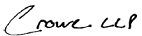 | |
| Crowe LLP |
We served as the Plan’s auditor from 2016 to 2025.
New York, New York
June 27, 2025
1.
Exhibit I
CONSENT OF INDEPENDENT REGISTERED PUBLIC ACCOUNTING FIRM
We consent to the incorporation by reference in Registration Statement No. 333-228733 on Form S-8 of Honeywell International Inc. of our report dated June 27, 2025 appearing in this Annual Report on Form 11-K of the Honeywell 401(k) Plan for the year ended December 31, 2025.
| |
| Crowe LLP |
New York, New York
June 29, 2026